
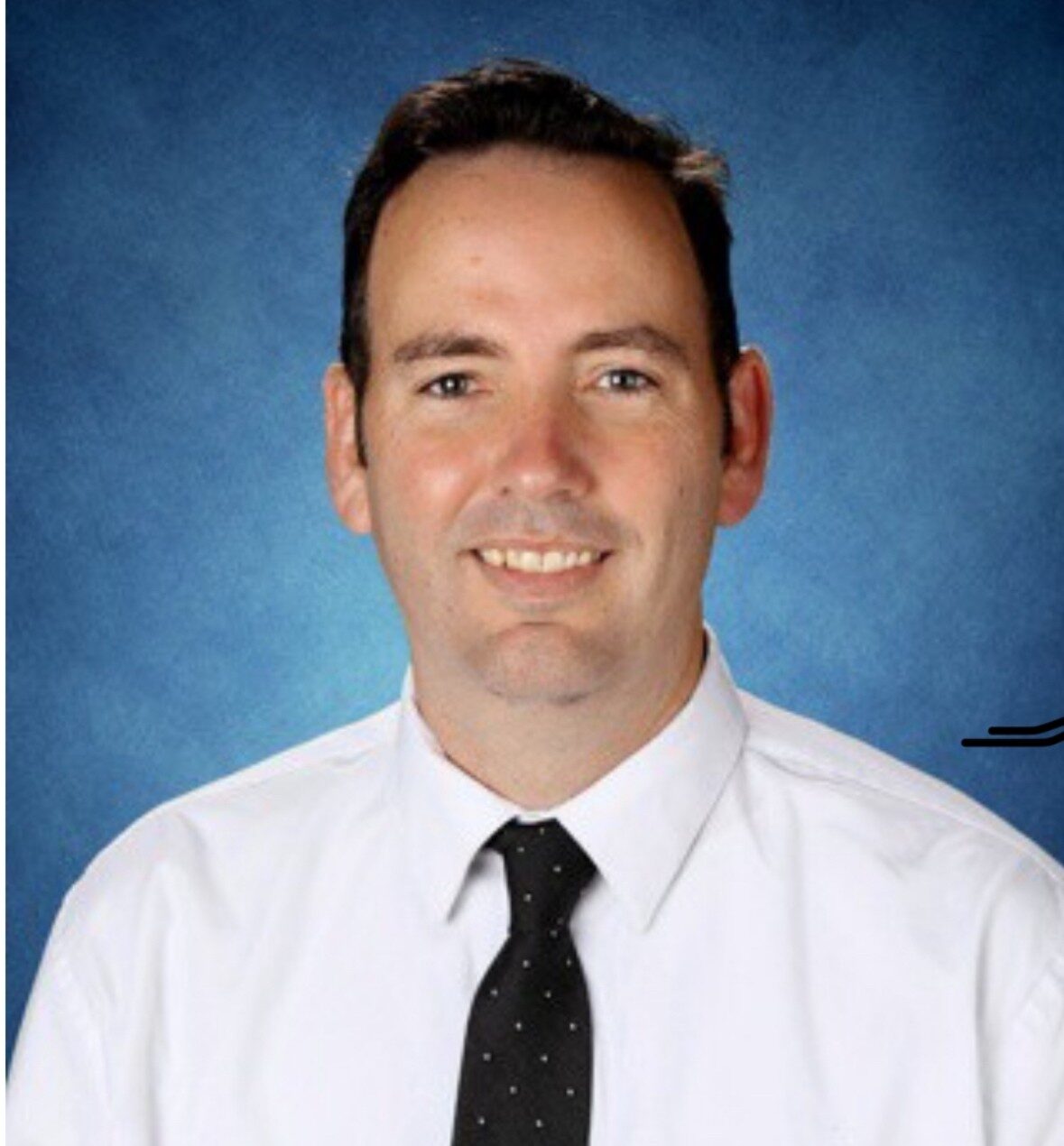
Education was not a profession I initially considered during my undergraduate years. I majored in political science with plans to attend law school. The summer before starting law school, I was fortunate to intern at a firm in Oregon. It was a valuable experience, but it quickly became clear that law was not my true calling.
After stepping away from that path, I began working at the corporate office of a local credit union in Eugene. The company offered a community outreach program that allowed employees to volunteer one hour per week at a local agency in need. As I was reviewing the list of volunteer opportunities with my wife, who was an education major, she remarked that schools could really use the help. The rest, as they say, is history.
I began volunteering at a designated Title I school, working with students experiencing poverty who were genuinely grateful for our weekly time together. I helped them with reading and math, and I quickly fell in love with teaching. Each week, I found myself returning to my banking job thinking, I would much rather be helping these kids than doing what I am doing now.
That experience changed the trajectory of my life and led me into the field of education, where I found a vocation, not just a career.
I currently serve as the secondary principal at Lourdes Central Catholic, and I absolutely love the mission-driven focus of our school. Lourdes has a diverse population of students and families, and while we have a strong and vibrant Catholic identity, we are also a welcoming community for students from many different denominations. Our small school environment allows each student to receive individualized attention and to be truly known.
One of our greatest strengths is our dedicated faculty and staff. They work tirelessly to support students academically, spiritually, and socially. We are blessed with educators who see their work not simply as a job, but as a vocation.
We have strong academics and a commitment to ensuring that every student receives a high-quality education. Just as importantly, we work hard to ensure that no student who desires a Lourdes education is turned away. I am particularly proud of the way our school embraces students with a wide range of learning needs. In addition to preparing students for college and future success, we intentionally support learners who need additional assistance through a robust special education program staffed by two full-time special education teachers.
Another essential part of our mission is the strong partnership we share with families. Parents are the primary educators of their children, and we value the trust they place in us. Our school thrives because of the collaborative relationship between home and school. It is a partnership built on communication, shared values, and the common desire to help each student grow in faith and excellence.
This commitment to academic achievement, individualized support, a welcoming community, and strong collaboration with families reflects the very heart of Catholic education. I feel honored to serve such a community. As St. John Bosco reminds us, “Education is a matter of the heart.”
I view education as one of the most important civil rights of our time. For nearly twenty years, I worked in the State of Oregon as a public schoolteacher and principal. I am deeply proud of the educators I had the privilege to work alongside, people who cared profoundly about their students and who gave their best every day, regardless of the circumstances.
Throughout those years, I served in districts with widely varying levels of resources. Some communities were able to pass a local option levy, which significantly increased funding for their schools. These levies were most often approved in districts where families had the means, organization, and stability to advocate for additional resources. As a result, students in those districts benefited from higher tax revenue, smaller class sizes, and more individualized learning opportunities. I most often worked in districts where this was not the case.
Many of my students were in classrooms approaching 30 students at the elementary level and far more at the secondary level. I frequently spoke with parents who felt frustrated and helpless, families who wanted a smaller, more personalized school setting for their children but simply did not have access to one. Some wished for a faith-based environment. Others had children with autism who needed a less stimulating space, or students who simply struggled in large public school settings. Too often, the only barrier was financial. They could not afford private tuition, and their district did not have the resources that other nearby communities enjoyed.
I felt deeply for these parents. Their worries were not abstract policy concerns. They were the hopes and fears of real families doing their best for their children. I sat with parents who wanted nothing more than a learning environment where their child could feel safe, supported, and understood. Some longed for a school where faith could be part of their child’s daily life. Others needed a less stimulating setting for a child with autism, or simply a smaller school where their son or daughter felt more comfortable. Too often, the only thing standing in their way was circumstance: where they lived or what they could afford.
Those conversations left a lasting impact on me. They strengthened my belief that no family should be denied the opportunity to choose the education their child needs to thrive.